
Header Image


Navigation images

First Impression: Sharjah

If I am the superstitious kind, I am beginning to wonder if this blogling is jinxed. Back in April, when I started embarking on this project, it was halted after a mere six blog posts. Yesterday, barely 2 posts in following the restart, I had to cancel a trip planned for today due to work commitment.

Oh well, never mind. I’ll just reschedule the trip for another time. Let’s continue with my mini adventures in the UAE.

While most visitors thronged the modern city of Dubai, I made my way to Sharjah, the emirate just to the north of Dubai. The most conservative among the seven emirates in the UAE, I was a little apprehensive on my first trip here. A last minute travel arrangement mix-up meant I would be arriving straight from my summer holiday in Malaysia and I was woefully underprepared wardrobe-wise. I had a suitcase full of shorts, skirts and tank tops. Plus 2 pairs of jeans. Luckily, I also had just that one long sleeve blouse and a pashmina, so they were essential pieces whenever I went out.

Sharjah lacks the glamour and glitter of Dubai, but it makes up for it aplenty by way of heritage. I normally began my exploration in the morning as the museums and baits typically open their doors at 8am. I like to be able to look around while things were still on the quiet side, not that I think these places would be overran by visitors in any case – Sharjah has been underappreciated in this sense. Visitors in the neighbouring Dubai almost never step foot into Sharjah. In any case, it was also cooler to be out early in the morning. By 9am, in July, the mercury registered some 42°C/108°F! Otherwise, visits would be relegated to later in the evening and there were risks I’d run into the after-office traffic of residences in Sharjah returning from Dubai. (Cheaper rent in Sharjah means a lot of workers commute between the two cities.)
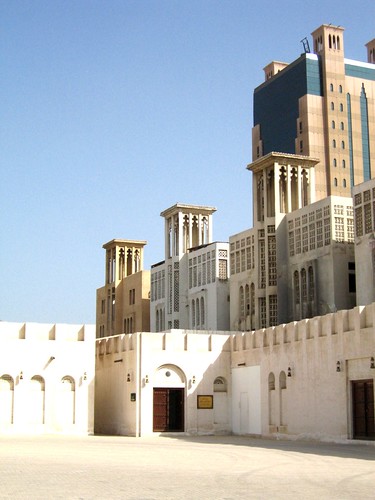
My visits had largely been confined to around Al Khan Lagoon as well as the Heritage and Arts Areas. Most of the attractions are small in scale but interesting all the same. In any case, anywhere else beyond these mostly falls within 3 categories – residential housing areas, industrial areas or desert. There are a few shopping malls around too, boasting many brand names not unfamiliar to international visitors. Had it not been for the Arabic name overhead next to the English version, I could have easily been in a mall in Europe. Or South-East Asia.

What was a tad disconcerting was the stares I received everywhere I went. It seems women in Sharjah (or the UAE, or in the Arabian Peninsula for that matter) simply don’t go out on their own, all alone. I must also emphasise, however, that at no point did I feel threatened although I did wish I wasn’t getting that much attention. I like to blend in wherever I go, but I’m afraid I stuck out like a sore thumb even if I was wearing long sleeve blouse and jeans and not showing much skin at all…
First impression: Dubai

Just because I say “I am flying out to Dubai on [insert day/date]” it doesn’t mean I am actually going to be in Dubai. In fact, in my recent trips to the UAE, the only time you’ll find me there would be (a) to meet up with a good friend of mine who does live in Dubai, (b) to shop, usually at Dubai Mall and you’re most likely to find me in a corner somewhere inside Kinokuniya, and (c) to eat – I was invited to a couple of high-end dinners and the food was amazing.

Dubai feels almost like Las Vegas in parts. Both cities flourishing in the middle of arid desserts, stretches over miles of land with gigantic buildings, wide avenues to accommodate multiple car lanes, opulent (if not clichéd) display of wealth, and in cities where imagination is the limit, spectacular feats have been achieved.

However, in Dubai, big casinos with neon signs are not lining the avenues. You don’t get married here by Elvis impersonators. Alcohol consumption is uncommon whereas hubbly bubbly won’t be missing from the table side. The main driving force of the labour market is an enviable troop of expats from India, Pakistan and Arabian Peninsula, so numerous are they that less than 20% of the population are Emiratis. Not only that, men also outnumber women at a ratio of about 3:1.

Identifying the locals is not difficult as they normally adhere to conservative dress code. The men wear kandura (white ankle-length shirt) and ghutrah (headdress, also in white) which is held in place using agal (accessory of black cord). Some also wear ghafiyah (prayer hat) underneath the ghutrah.

The women typically wear abbaya (black over-garment robe) and hijab (headdress) – mostly shayla rather than niqab or burqa (which I admit to not have seen here so far). If you think the ladies’ garments are boring, think again. Often, the abbaya have beautifully embroidered sleeves, collar and hem, and even styling the shayla is an art of its own – check out this article on the latest hijab fashion! In addition, underneath the abbaya, they’re likely to be wearing chic designer offerings or top and jeans combo that you and I are accustomed to.

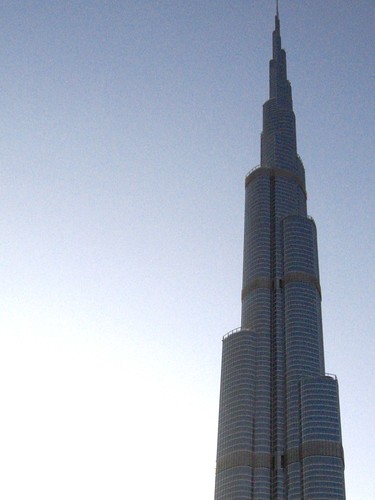
I believe the skyline of modern Dubai can give Manhattan a run of its money (I’ll let you know for sure what my view is when I get to see it for myself). Burj Khalifa towers over all structures and can be seen miles away when travelling towards Dubai. At 828m in height, it is no wonder the other buildings seems dwarved in comparison, even when over 50 of these are each taller than 200m – that’s at least 126 of me stacked one atop another. As I’ve said right from the start, this city is built based on a very large scale!

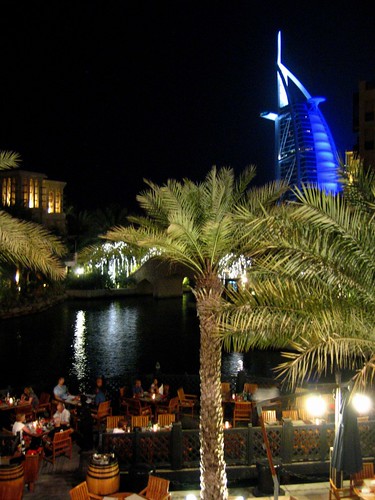
Don’t count on admiring the famous sail-shaped Burj Al-Arab from most part of Dubai city. It is located off the coast of Jumeirah, to the west of Dubai. Unless, of course, you’re driving out to The Palm Jumeirah and wanting a peek at The Atlantis Dubai, or taking a tour on the hop-on, hop-off buses (blue route, folks). Then, you simply can’t miss it, to your right when travelling towards Jumeirah from downtown Dubai.

Personally, I have not yet been on the hop-on, hop-off buses so I can’t tell you if it’s worth taking. It doesn’t come cheap, at USD60 (~AED210) for 24 hours, adult ticket. However, do consider that this is a city that’s hard to get from one place to another without a car if and taxi fares are not going to be cheap either if you’re darting all over the greater Dubai area.

TAR in Penang

The Amazing Race took off to Penang, Malaysia in its latest instalment, challenging the racers a) in the Detours to either carry a dozen of giant joss sticks (“Buddhist Tradition”) to the top of a temple or balancing chingay flags across a certain distance (“Chinese Custom”), and b) in the Roadblock to prepare a Hindu offering.

Here’s a video if you’ve missed the airing on Sunday night.

The pitstop of the race is the Pinang Peranakan Mansion, a beautiful heritage mansion that houses antiques and collectibles associated with the culture and custom of the Peranakans.

In a couple of months time, I’ll be heading to Penang where one of my brothers lives. I must make this one of the places to see. Afterall, our greatgrandmother was originally from Penang and she was a Peranakan too. It’s high time for me to take a deeper look into part of my heritage, which I should have learned while she was alive. However, being young and naive then, I didn’t appreciate just how much I would have missed out by failing to take an interest in it.

It is definitely time to catch up.


Notify me!

Enter your email address to subscribe to this blog and receive notifications of new posts by email.

Most read today