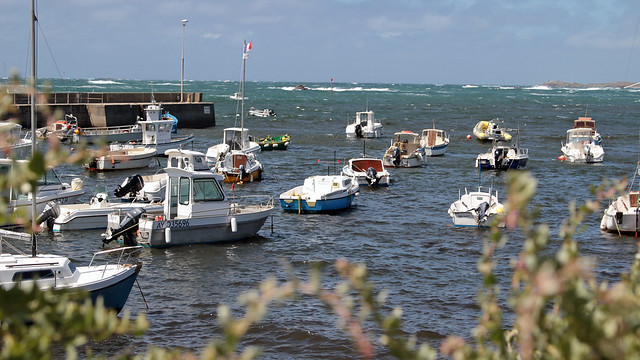
What a glorious day it was, when we drove our way down to Quiberon. A former island in the Atlantic ocean until the 11th century, when formation of a tombolo changed its landscape and connected the island to the mainland, creating a peninsula with an isthmus that sports a width of mere 22m at its narrowest point.
The key to truly enjoy the coastal front of the Côte Sauvage is to avoid the chock-a-block main road, particularly during the summer holiday season, that goes through St-Pierre-Quiberon down to Quiberon. Instead, on passing the tombolo and immediately on arrival of the former island, take a right turn in the direction of Portivy. From there, it’s a straight drive along the coast. Better still, park the car and take a long, invigorating walk while admiring the wild coast which sees waves after waves crashing in.
Continue reading »
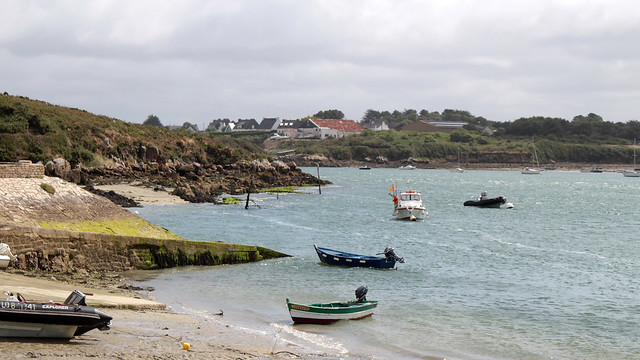
The Ria d’Étel empties into the Bay of Biscay, and right at this meeting point, things can get pretty interesting. After our morning detour to Saint Cado, we continued driving westwards to Barre d’Etel, located at the mouth of the estuary.
Along the river, large volumes of water are displaced by the tides and the estuary itself is subject to strong currents – we saw multiple signs warning potential swimmers from committing the folly of mounting a watery challenge. At Barre d’Etel, an ever shifting band of sand is formed by these cross currents. Additionally, on days with strong wind, be prepared for the assault of the sand. (Yes, I was ill-prepared, for I arrived wearing shorts and it was painful being pelted non-stop that I couldn’t go anywhere near the seafront! Everyone else came back with pocketful of sands instead.)
Continue reading »
Another month, another wedding to attend. While July’s wedding took us to Dijon for a weekend, August saw us heading to Morbihan (southern Brittany) for a handful few days to celebrate the marriage of one of my best friends from my Dublin days. While we were there, as you may have guessed – road trip!
One of our post-wedding sightseeing stops in the region was Saint Cado, a small islet just to the north of Belz. It is such an idyllic village, set with stone and whitewashed houses surrounding a chapel that was built in the 12th century on the site originally founded in the 6th century, and flat green fields that occupy the eastern half of the islet. It is also surrounded by structures that indicate oyster farming as the main economic activity off its immediate bay today. Between the islet and the mainland, a singular stone house is seen to sit on another small rock island in the middle of Ria d’Etel.
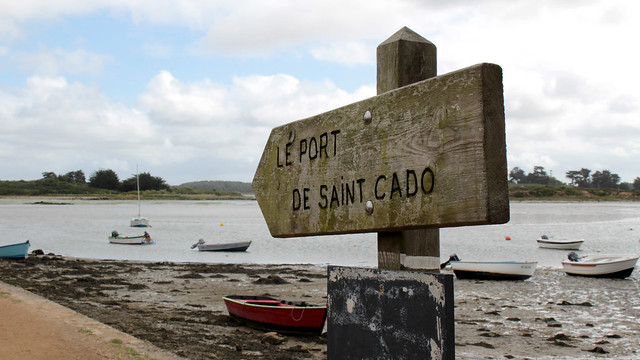
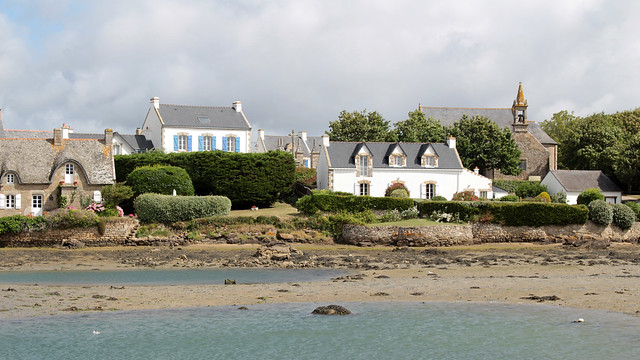
Continue reading »
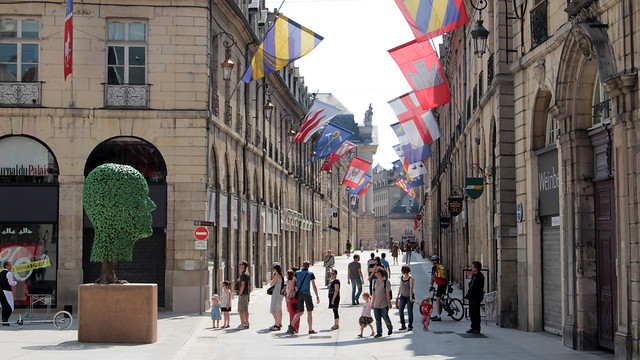
A second wedding invitation this summer saw us heading to Rahon on the weekend of 14 July, and we took the opportunity to visit Dijon too. Probably not the best travel move of the year, since our sightseeing day was not only on a Sunday, it was also the 14 July, and just about everything was shut. We explored the town by foot randomly, and with some tips from the tourist information centres that were, surprisingly, open on a Sunday and a public holiday to boot, we found some activities to do.
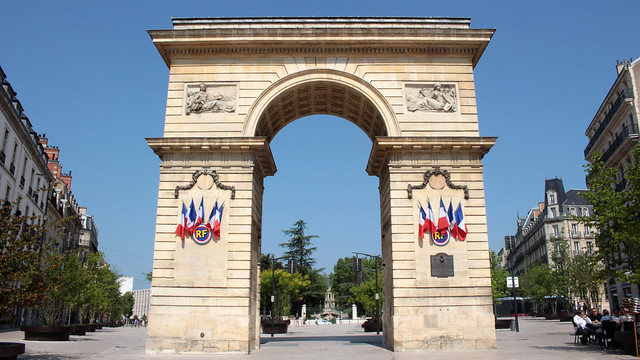
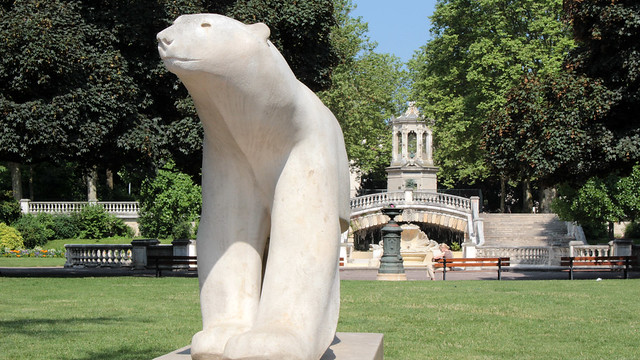
Continue reading »
I have a thing for the fleur de sel. The “flower of salt” is famously hand-harvested in Guérande, just south of Brittany, although there are other (mechanically collected) productions in Noirmoutier, Île de Ré and Camargue too. Moist to touch and pale silver-grey in colour, this fine salt has such a delicate taste that once you start to use fleur de sel, it’s hard to imagine going back to your average table salt. I couldn’t describe it but know that it doesn’t taste like any other salt in the world.
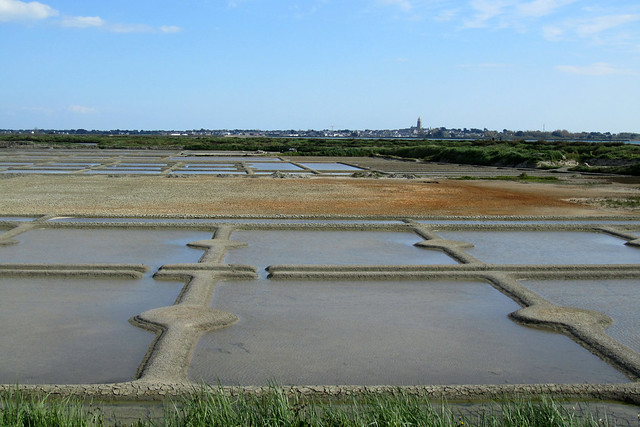
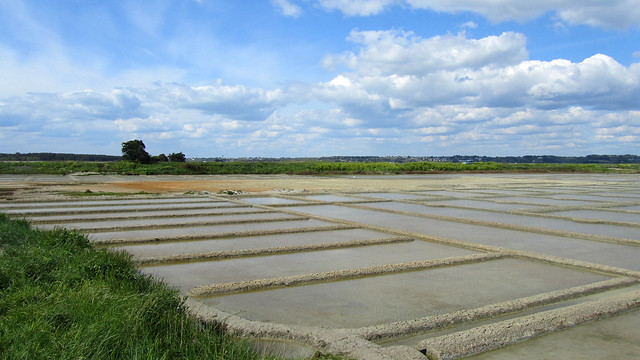
Just outside of the historical town of Guérande lies the salt marshes, the marais salant, where the fleur de sel is harvested. A complex series of waterways, including the traicts protected by Le Croisic and Pen Bron, channels the water of the Atlantic Ocean into shallow marshes; the water fills up the basins – also known as vasière – during high tide and is then guided to into the marshes known as the œillets via designated narrow water networks.
Continue reading »
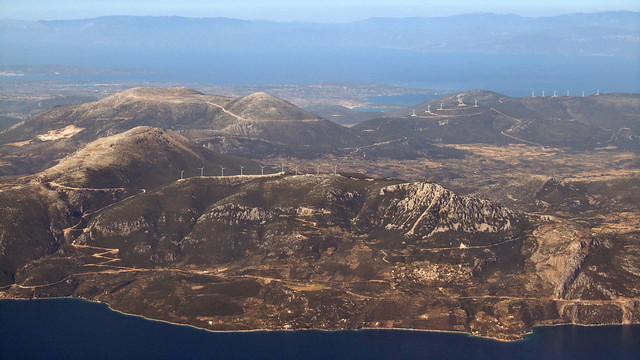
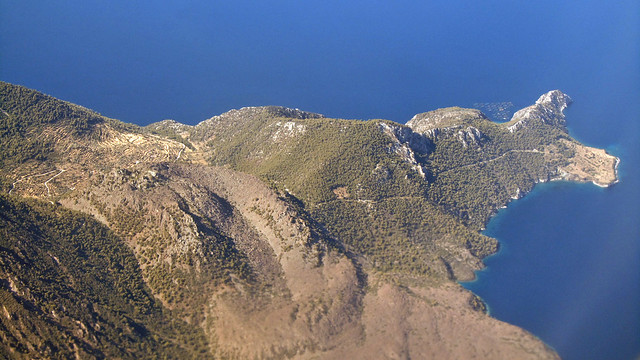
Getting a window seat, preferably one which has a wing-free view, is something of a perk when flying. At least to me, it is. And that is how, once, I was treated to the most beautiful view of Paris over sunset (November 2010, Dubai-Paris), including an Eiffel Tower that was sparkling and shimmering away.
I love looking out at take-off and landing. In between, when we’re cruising at a reasonable altitude without cloud cover, everything seems like a miniature toy below. I love watching sunrise and sunset in the horizon, because it’s never like anything that you’ve seen while on the ground. I love imagining just how fluffy some of the clouds can be, especially when they stretch out endlessly. I especially love it when the pilots are nice and decide to play tour guides from time to time and point out where we are flying over at that moment.
Continue reading »
I felt a little guilty for treating Athens as a stop-and-go point. This immense and sprawling city was the gateaway to our island escapades, and oh escaping Athens we did. We hopped on a ferry out to Naxos a mere few hours after arrival at the airport, and we’ve set aside only our last day to sightsee the city because, well, we had an early flight the next morning. What I had not predicted was the delay in our overnight ferry back to Athens.
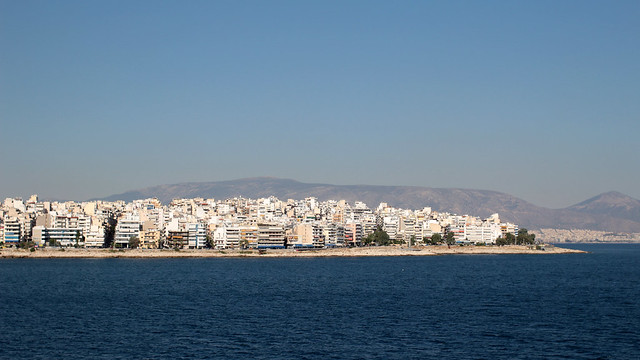

As our allocated 24 hours dwindled to about 20 hours, and our very weary bodies refusing to cooperate fully after sitting and waiting cluelessly at the port in Santorini in the middle of the night, we managed to tough it out for 7 hours under the stifling Athenian afternoon sun. We then crashed out. As I didn’t pay enough attention to the information board that I was supposed to be reading, I don’t have much to tell, just pictures to share.
Continue reading »
On the final full day of our stay in Santorini, we decided to culture up a little before we board our Athens-bound ferry which was scheduled at 1.25am. We hopped onto a southern Santorini tour that consisted of a fairly small group – we numbered not more than fifteen, despite travelling in a large coach that could easily fit another twenty or so other people. We were accompanied by good-humoured Francisco, who for some reason, spoke with a bedroom-raspy voice on using a microphone but not otherwise. ;)
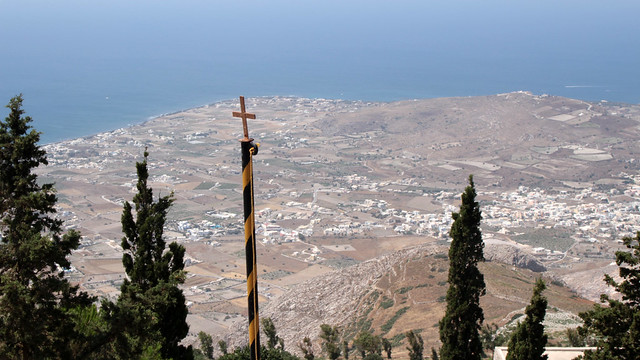
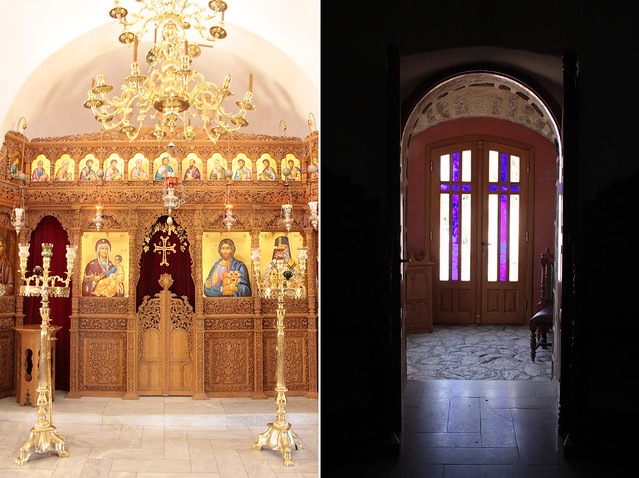
First up, the highest point on Santorini – Mount Profitis Ilias – which peaks at 567 metres. The road onto the monastery is narrow, windy and rather treacherous given the number of ATV that were trying to do the climb on the shoulder of the road. I wasn’t sure (and still am not) how the driver was not nervous manoeuvering the coach on tight corners, and at one point, we even squeezed by a car with shattered windscreen following an accident with a tourist-handled ATV. The young rider and his friends were all huddled by the road, visibly shaken. It made me glad that we were not driving ourselves!
Continue reading »
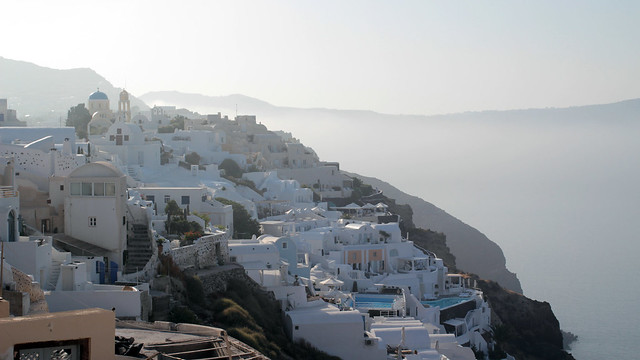
There is no doubt that Oia is high on the touristic scale. Come evening, for the sake of the beautiful sunset, everyone seems to flock to this little northern village of Santorini. The marble-paved streets may see constant footfall throughout the day but in the morning, calm can easily be found, along with foggy vista thanks to the high level of humidity.
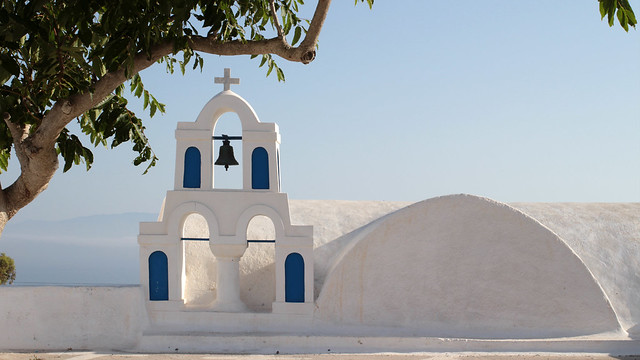
I’ll let the 30 photos below show you what the village of Oia is like, in the wispy morning, under the hot afternoon sun, and transitioning between the last lights of the day and the night. [Hover over photo for captions as usual]
Continue reading »
Santorini is not a very big island, and by all accounts, have a good network of public buses that run regularly and budget-friendly in term of ticket prices. To us, this negates the need to rent a car and drive on unfamiliar, narrow and windy roads. The network radiates from Fira, however, thus we would need to travel from Oia to Fira each time for onward bus connection.
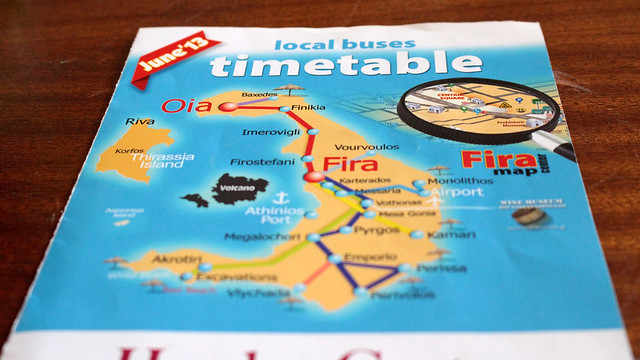
I’ve been advised by friends to make sure we have a copy of the latest bus timetable. We were also, understandably, to know that any time indicated would be approximative. Afterall, there’s no predicting the traffic, right? Like a good trooper, I duly downloaded and printed a copy of the timetable from the bus company’s website.
Continue reading »